Virginia is for Hikers! Best National Parks in Virginia
- Family Friendly
- National Parks
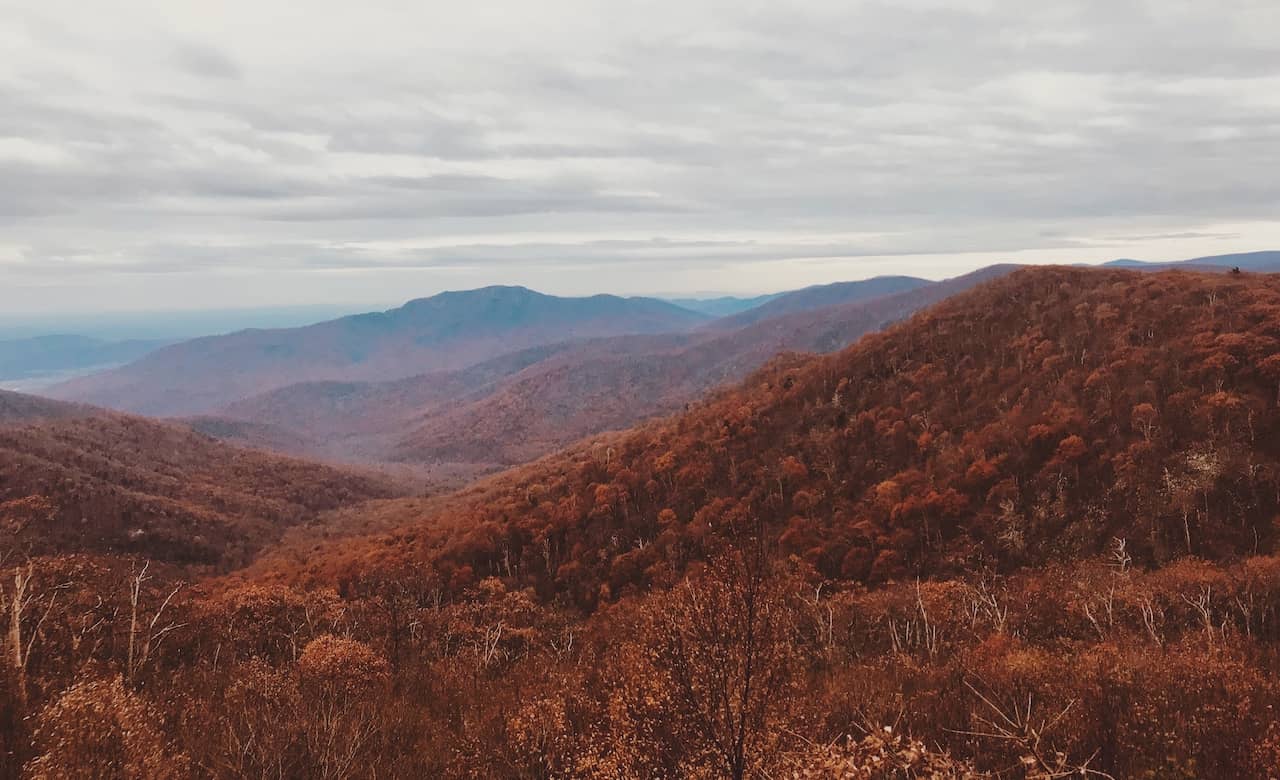
Virginia is one of the most rewarding states in the country for road travelers. From the misty ridgelines of the Blue Ridge Mountains to the marshlands of the Eastern Shore, the natural beauty here is genuinely stunning, and that's before you factor in the layers of American history woven into almost every stretch of road. Whether you're drawn to sweeping mountain vistas, coastal wildlife, or the battlefields and monuments that shaped a nation, the national parks in Virginia deliver an experience unlike anywhere else.
For RV travelers, Virginia is especially appealing. Parks are spread across the state, campgrounds are plentiful, and the scenic drives connecting one destination to the next are some of the best in the East. This guide covers the best Virginia national parks, what to do at each, and how to plan a road trip that makes the most of it all.
How Many National Parks Are in Virginia?
If you've ever searched "how many national parks are in Virginia" and come away with a vague answer, here's the clearest version: Virginia is home to 22 sites managed by the National Park Service. That number surprises many travelers, because only one, Shenandoah, carries the official "national park" designation. The rest fall under a broader umbrella of NPS-managed units that includes national historical parks, national battlefield parks, national monuments, national scenic trails, national seashores, national parkways, and even a national park for the performing arts.
That variety is actually what makes Virginia so interesting. In a single road trip, you can stand where the Civil War ended, drive one of the most celebrated scenic roads in America, hike through old-growth forest, and watch wild ponies wade through Atlantic surf. The National Park Service has done an exceptional job preserving the full range of what Virginia has to offer. For RV travelers, that means there's no shortage of campgrounds, scenic pull-offs, and park visitor centers to anchor an itinerary around.
Shenandoah National Park
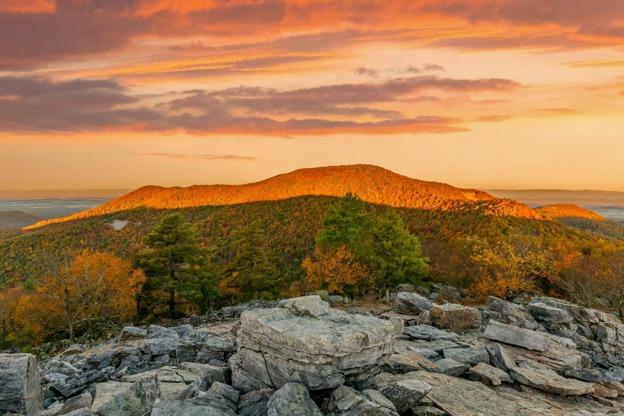
No list of national parks in Virginia would be complete without starting here. Shenandoah National Park is the state's crown jewel, a 300-square-mile stretch of protected wilderness running along the spine of the Blue Ridge Mountains in the northern portion of the state. Roughly 1.4 million people visit each year, drawn by the hiking, the wildlife, the waterfalls, and above all, Skyline Drive, the 105-mile scenic road that runs the entire length of the park from Front Royal to Waynesboro.
Skyline Drive
Skyline Drive is one of the most iconic road trip routes on the East Coast. The speed limit is capped at 35 mph by design; this is a road meant to be savored, not rushed. Along the way, more than 75 overlooks offer views of the Shenandoah Valley to the west and the Virginia Piedmont to the east. Fall is the most popular time to drive it, when the hardwoods turn, and the ridge is blanketed in red, orange, and gold. Spring brings wildflowers and waterfalls running strong from snowmelt. Even winter has its appeal, with quiet roads and clear views through the bare trees.
Top Hiking Trails in Shenandoah
The park has over 500 miles of trails, including roughly 101 miles of the Appalachian Trail. Here are some of the most popular:
|
Trail |
Distance |
Difficulty |
Highlights |
|
Old Rag Mountain |
9.2 miles |
Strenuous |
Rock scramble, 360° summit views |
|
Dark Hollow Falls |
1.4 miles |
Moderate |
Closest waterfall to Skyline Drive |
|
Bearfence Mountain |
1.2 miles |
Moderate |
Rock scramble, panoramic views |
|
Hawksbill Summit |
2.9 miles |
Moderate |
Highest peak in the park |
|
Whiteoak Canyon |
4.6 miles |
Moderate |
Six waterfalls in one hike |
Wildlife Viewing
Shenandoah is one of the best spots in the mid-Atlantic for wildlife viewing. White-tailed deer are common along Skyline Drive, especially at dawn and dusk. Black bears are frequently spotted throughout the park, so keep food secured and follow NPS guidelines. Birders will find over 200 species, including peregrine falcons nesting on rocky outcrops and wild turkeys wandering the meadows.
RV Camping in Shenandoah
The park has four campgrounds, two of which are well-suited for RVs:
-
Big Meadows Campground: Centrally located at mile 51, this is the most popular campground in the park. Sites accommodate RVs up to 35 feet, and the location puts you within walking distance of several trailheads and the Byrd Visitor Center.
-
Loft Mountain Campground: Located in the southern section of the park at mile 79.5, Loft Mountain is a bit quieter and offers beautiful ridgeline views. RVs up to 35 feet are accommodated here as well.
Note that Shenandoah's campgrounds do not offer hookups, so come prepared with a full tank and charged batteries. Reservations are strongly recommended from May through October.
Blue Ridge Parkway
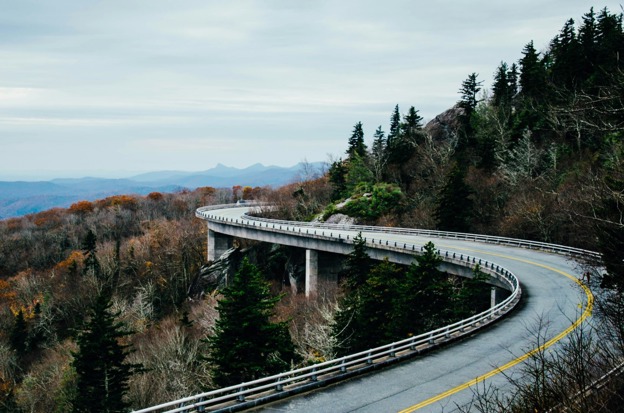
Where Skyline Drive ends at Waynesboro, the Blue Ridge Parkway begins, and the scenery doesn't let up. This 469-mile road stretches from Shenandoah National Park all the way to Great Smoky Mountains National Park in North Carolina, with roughly the first 217 miles running through Virginia before crossing into neighboring states. Like Skyline Drive, it's a road built for the journey itself, with a 45 mph speed limit, no commercial vehicles, and an endless succession of overlooks, meadows, and mountain vistas.
The Blue Ridge Parkway is one of the most visited units in the entire national park service system, not because of a single headline attraction, but because of the cumulative experience of driving it. The Appalachian Mountains roll out in every direction, small historic homesites dot the roadside, and hiking trails branch off at nearly every pull-off.
Highlights Along the Virginia Stretch
-
Humpback Rocks (Milepost 5.8): One of the first major stops heading south from Waynesboro. A steep but rewarding 2-mile hike leads to an exposed rock outcrop with sweeping views of the Shenandoah Valley. There's also a recreated 19th-century mountain farm at the visitor center.
-
Otter Creek Area (Milepost 60–63): A peaceful stretch along Otter Creek with easy walking trails, a small campground, and one of the few restaurants along the Virginia portion of the parkway.
-
James River Visitor Center (Milepost 63.6): Located at the lowest elevation point on the entire parkway, this stop features a footbridge over the James River and a trail to a restored canal lock from the 19th century.
-
Peaks of Otter (Milepost 86): One of the most popular stops on the Virginia parkway, featuring Sharp Top Mountain, Abbott Lake, and a lodge with stunning views. The hike to Sharp Top summit is about 3.3 miles round trip with significant elevation gain.
-
Smart View (Milepost 154.5): A quieter stop with a loop trail through open meadows and a restored 1890s cabin — great for a picnic break.
-
Rocky Knob (Milepost 167–174): A rugged area near the North Carolina border with backcountry camping, cabin rentals, and access to the Rock Castle Gorge trail.
Seasonal Highlights
|
Season |
What to Expect |
|
Spring |
Wildflowers, redbud and dogwood blooms, fewer crowds |
|
Summer |
Lush green canopy, warm temps, busiest season |
|
Fall |
Peak foliage typically mid-October; the most popular time to visit |
|
Winter |
Quiet roads, icy conditions possible, some facilities closed |
RV Notes for the Blue Ridge Parkway
The parkway is generally RV-friendly, but there are a few things to keep in mind:
-
Length restrictions apply at some tunnels and overlooks — RVs over 30 feet should check the NPS parkway map for restricted sections before heading out
-
Otter Creek Campground and Peaks of Otter Campground are the two main campground options on the Virginia stretch, both accommodating RVs with a 30-foot size recommendation
-
Fuel and supplies are limited along the parkway itself. Stock up before you get on, and plan stops in towns like Waynesboro, Buena Vista, or Floyd
-
Cell service is spotty through much of the Virginia section, so download offline maps before you go
Virginia's Civil War Battlefield Parks
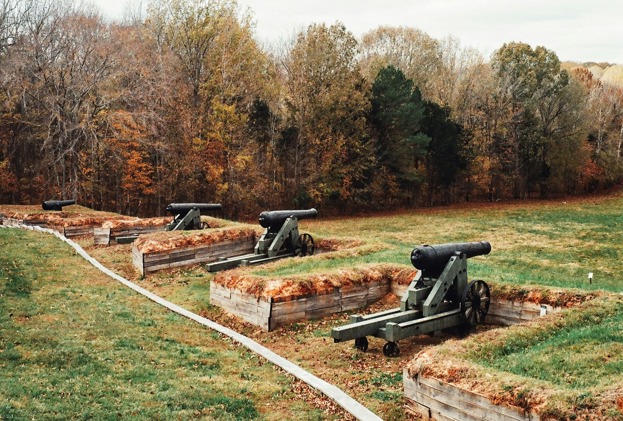
Virginia saw more Civil War combat than any other state. From the early chaos of First Bull Run to the final surrender at Appomattox Court House, the war's defining moments played out across Virginia's fields, forests, and river crossings. The National Park Service preserves many of these sites today, and together they form one of the most significant collections of battlefield parks in the country. For history-minded RV travelers, connecting these sites into a single road trip is a deeply rewarding experience.
Here's a look at the major Civil War national parks in Virginia:
Manassas National Battlefield Park
Located in Northern Virginia, about 25 miles west of Washington D.C., Manassas was the site of not one but two major battles. The First Battle of Bull Run in July 1861 was one of the earliest large engagements of the American Civil War, and it shattered the North's hope for a quick victory. The Second Battle of Bull Run followed in August 1862, resulting in another Confederate victory and setting the stage for General Robert E. Lee's first invasion of the North. The park spans over 5,000 acres and features a well-stocked visitor center, walking trails across the battlefield, and preserved artillery positions that bring the scale of the fighting into sharp focus.
Fredericksburg and Spotsylvania National Military Park
This park preserves four major battlefield sites where the Union and Confederate armies clashed in some of the war's bloodiest fighting:
-
Battle of Fredericksburg (December 1862): A disastrous Union assault on a heavily fortified Confederate position
-
Battle of Chancellorsville (May 1863): Often considered Lee's most brilliant tactical victory
-
Battle of the Wilderness (May 1864): A brutal two-day battle fought largely through dense forest
-
Battle of Spotsylvania Court House (May 1864): Eighteen days of some of the most intense combat of the entire war
The park covers over 8,000 acres across two visitor centers and is one of the most comprehensive Civil War sites in the country. Plan for at least a full day if you want to do it justice.
Petersburg National Battlefield Park
The Siege of Petersburg was one of the longest campaigns of the Civil War, lasting from June 1864 to March 1865. Union forces under General Ulysses S. Grant surrounded the Confederate capital's supply lines, slowly strangling the Confederate army's ability to hold Richmond. The Eastern Front Visitor Center is the best starting point, with exhibits that explain the nine-month siege in clear detail. From there, the park tour road connects the major earthworks, artillery positions, and historic sites across the battlefield. Poplar Grove National Cemetery, located within the park, is the final resting place of more than 6,000 Union soldiers, a sobering and moving stop on any visit.
Richmond National Battlefield Park
Richmond served as the Confederate capital for most of the Civil War, making it a constant target for Union forces. The Richmond National Battlefield Park protects 13 sites connected to multiple campaigns, including the Seven Days Battles of 1862 and the fall of the city in April 1865. The park is spread across the greater Richmond area, so a car or RV is essentially required to connect the sites. Pick up a driving tour map at the visitor center to make the most of your time.
Appomattox Court House National Historical Park
This is where it ended. On April 9, 1865, Confederate General Robert E. Lee surrendered to Union General Ulysses S. Grant at the McLean House in the village of Appomattox Court House, bringing the American Civil War to a close. The National Park Service has meticulously restored the village to its 1865 appearance, and visitors can walk through the reconstructed courthouse, tour the McLean House where the surrender took place, and explore the surrounding grounds on several short hiking trails. It's one of the most emotionally resonant historic sites in the country, and the ranger-led programs here are exceptional.
|
Park |
Location |
Acres |
Key Feature |
|
Manassas NBP |
Northern Virginia |
5,000+ |
Two major battle sites, visitor center |
|
Fredericksburg & Spotsylvania NMP |
Fredericksburg |
8,000+ |
Four battlefield sites, two visitor centers |
|
Petersburg NBP |
Petersburg |
2,700+ |
Siege earthworks, Poplar Grove National Cemetery |
|
Richmond NBP |
Richmond |
3,000+ |
13 Civil War sites across the city |
|
Appomattox Court House NHP |
Appomattox |
1,700+ |
Site of Confederate surrender |
Colonial National Historical Park

Long before the Civil War defined Virginia's place in American history, the state was the birthplace of the nation itself. Colonial National Historical Park preserves some of the most important ground in all of early American history, connecting three sites that together tell the story of how America was founded, fought for, and won. The park is located in the Hampton Roads region of southeastern Virginia and can easily fill an entire day or two.
Historic Jamestown
Jamestown is where it all began. In 1607, English settlers established the first permanent English settlement in North America, here on a small peninsula along the James River. The National Park Service manages Historic Jamestowne in partnership with Preservation Virginia, and together they oversee one of the most active archaeological sites in the country. Visitors can walk among the original fort foundations, view thousands of artifacts recovered from the site, and watch archaeologists at work in the field. The story told here is complex, one of survival, conflict with native americans, and the painful beginnings of slavery in America, and the park does not shy away from any of it.
Key things to see at Historic Jamestowne:
-
The original 1607 fort site, revealed through ongoing excavation
-
The Archaearium museum, housing over 3 million artifacts from the site
-
The reconstructed Church Tower, the oldest standing English structure in America
-
The James River shoreline, where the first landing of English colonists took place in 1607
Yorktown Battlefield
At the other end of Colonial Parkway, the scenic 23-mile road that connects the park's sites, lies Yorktown Battlefield, where the Revolutionary War effectively came to an end. In October 1781, American and French forces under General George Washington besieged the British army under Lord Cornwallis, forcing a surrender that secured American independence. The Yorktown Battlefield Visitor Center has an excellent collection of original artillery, maps, and exhibits that put the campaign in context. From there, a self-guided driving tour loops through the battlefield, earthworks, and the Moore House, where surrender terms were negotiated.
Colonial Parkway
The road connecting Jamestown and Yorktown is itself a national park experience worth savoring. Colonial Parkway winds through 23 miles of protected woodland and waterfront, passing through the heart of Colonial Williamsburg along the way. There are no commercial vehicles or billboards, and the design intentionally keeps the modern world at a distance. It's a beautiful drive at any time of year, but especially in spring when the dogwoods bloom along the roadside.
Planning Your Visit
Colonial National Historical Park rewards those who take their time. Here's a suggested approach for RV travelers:
|
Site |
Recommended Time |
Don't Miss |
|
Historic Jamestowne |
2–3 hours |
The Archaearium, active dig sites |
|
Colonial Parkway Drive |
45–60 minutes |
Waterfront views, woodland scenery |
|
Yorktown Battlefield |
2–3 hours |
Visitor center, battlefield driving tour |
Note that Colonial Williamsburg sits between the two park sites but is managed separately, budget extra time if you want to explore the historic district. RVs are welcome throughout the park, though parking at Jamestowne can be tight during peak summer weekends. Arriving early is always the best strategy.
More National Parks and Protected Areas Worth Visiting
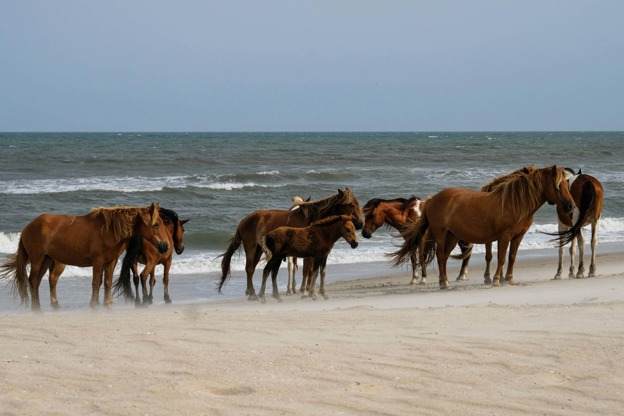
Virginia's 22 NPS-managed sites extend well beyond the big-name destinations. The parks and protected areas below don't always make the top of the list, but each one offers something genuinely worth going out of your way for, whether that's wild ponies on a barrier island, roaring waterfalls near the nation's capital, or a performing arts experience unlike anything else in the national park system.
Assateague Island National Seashore
Stretching along Virginia's Eastern Shore on the Atlantic coast, Assateague Island National Seashore is one of the most unusual and memorable national parks in Virginia. The park protects a 37-mile barrier island shared between Virginia and Maryland, and it's best known for its population of wild ponies; small, sturdy horses that have lived on the island for centuries and roam freely across the dunes and marshes. Beyond the ponies, Assateague offers miles of undeveloped beach, excellent wildlife viewing for shorebirds and waterfowl, kayaking through tidal marshes, and some of the most peaceful camping on the East Coast.
Top things to do at Assateague Island:
-
Wildlife viewing along the 3.2-mile Wildlife Drive, especially at dawn and dusk
-
Swimming and beachcombing on the Atlantic side
-
Kayaking and paddleboarding through the back bay and marsh channels
-
Overnight camping — both drive-in and backcountry sites available
-
Birdwatching — the island sits along the Atlantic Flyway and hosts hundreds of species seasonally
RV campers should note that the Virginia side of the island (managed in conjunction with Chincoteague National Wildlife Refuge) has drive-in camping with some hookup sites available. It's one of the few national seashore campgrounds on the East Coast with this level of RV amenities.
Great Falls Park
Just 15 miles from Washington D.C. in Northern Virginia, Great Falls Park is one of the most dramatic and underappreciated stops in the entire NPS system. The Potomac River narrows sharply here and thunders through a series of steep, jagged falls, the largest whitewater section on the river, before continuing south toward the Chesapeake Bay watershed. Three overlooks give different perspectives on the falls, and the views are genuinely spectacular after heavy rainfall.
The park has about 15 miles of trails ranging from easy riverside walks to more rugged terrain along the gorge. The River Trail is the most popular, following the Virginia bank of the Potomac River with views across to the Maryland side and the C&O Canal. Great Falls Park is managed as a day-use area with no camping, but it makes an excellent stop for RV travelers based in the Northern Virginia area.
Prince William Forest Park
Located in Prince William County just south of the Marine Corps Base Quantico, Prince William Forest Park is the largest park preserve of the Piedmont Forest in the national park system, covering more than 15,000 acres of the Chesapeake Bay watershed. It's a surprisingly wild and peaceful escape given its proximity to the Washington D.C. metro area, and it sees a fraction of the crowds that Great Falls Park attracts.
The park was developed during the Great Depression by the Civilian Conservation Corps, and several of the original cabin camps from that era are still standing and available for group rental. For RV travelers, Prince William Forest Park has a campground with sites accommodating rigs up to 40 feet, making it one of the better-situated base camps for exploring Northern Virginia.
Things to do at Prince William Forest Park:
-
Hiking on over 37 miles of trails through mature hardwood and pine forest
-
Wildlife viewing — white-tailed deer, river otters, over 100 bird species
-
Fishing in Quantico Creek and its tributaries
-
Cycling on designated forest roads
-
Exploring the historic CCC cabin camps
George Washington Memorial Parkway
The George Washington Memorial Parkway runs along the Virginia bank of the Potomac River from Mount Vernon, George Washington's historic estate, north through Alexandria and Arlington before connecting to the Capital Beltway. Managed by the National Park Service, the parkway is far more than a commuter road. It's a green corridor connecting some of the most historically significant grounds in Northern Virginia, including Arlington House, the Robert E. Lee Memorial, and Arlington National Cemetery.
The parkway itself offers pull-offs with views across the Potomac River toward Washington D.C., and the Mount Vernon Trail, an 18-mile paved multi-use path, runs its entire length. Arlington House sits above the cemetery grounds and tells the complicated story of Confederate general Robert E. Lee's family home, which was seized by Union forces early in the Civil War and ultimately became the site of Arlington National Cemetery. Both are free to visit and well worth the stop.
Wolf Trap National Park for the Performing Arts
Wolf Trap is one of a kind, the only national park in the United States dedicated entirely to the performing arts. Located in Vienna, Virginia, in the heart of Northern Virginia's Fairfax County, the park is home to the Filene Center, an open-air amphitheater that hosts performances ranging from opera and classical music to jazz, pop, and theater throughout the summer season. The Wolf Trap Foundation for the performing arts manages the programming, while the National Park Service maintains the grounds.
Even if you don't catch a performance, the park's 117 acres of open lawn and woodland are pleasant to walk. But the real draw is the performing arts experience itself; there's something genuinely special about watching a world-class performance in an outdoor setting managed by the National Park Service. Check the schedule before you visit, as the best shows sell out well in advance.
Other NPS Sites Worth Noting
Virginia's national park system also includes several smaller but historically significant sites that reward curious travelers:
|
Site |
Location |
Why Visit |
|
Cedar Creek & Belle Grove NHP |
Middletown |
Civil War battlefield, historic plantation |
|
Fort Monroe National Monument |
Hampton |
Decommissioned Civil War-era fort, beachfront grounds |
|
Booker T. Washington National Monument |
Franklin County |
Preserved birthplace of the educator and leader |
|
Maggie L. Walker National Historic Site |
Richmond |
Home of America's first female bank president |
|
Cumberland Gap National Historical Park |
Southwest VA |
Appalachian Mountain Passage was used by native americans and early settlers |
|
George Washington Birthplace National Monument |
Westmoreland County |
Colonial plantation, memorial to the first president |
Best Time to Visit Virginia's National Parks

One of the great advantages of planning a Virginia national parks road trip is that the state rewards visitors in every season. The experience changes dramatically depending on when you go, crowds, weather, trail conditions, and wildlife activity all shift through the year. Here's a breakdown of what to expect season by season:
|
Season |
Months |
Conditions |
Best For |
|
Spring |
March–May |
Mild temps, wildflowers, occasional rain |
Hiking, waterfalls, fewer crowds |
|
Summer |
June–August |
Hot and humid, peak crowds |
Full park access, swimming, family travel |
|
Fall |
September–November |
Cool temps, peak foliage mid-October |
Scenic drives, photography, hiking |
|
Winter |
December–February |
Cold, some closures, minimal crowds |
Solitude, clear views, budget travel |
Planning a Virginia National Parks Road Trip by RV
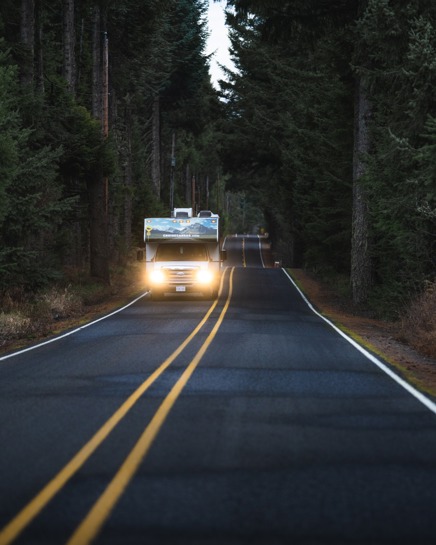
Virginia is one of the most RV-friendly states on the East Coast, and its national parks are spread in a way that lends itself naturally to a road trip format. The state is compact enough that you can connect multiple parks in a single trip without logging exhausting driving days, yet diverse enough that each stop feels completely different from the last. Here's everything you need to know to plan a smooth Virginia national parks road trip by RV.
A Suggested RV Road Trip Route
This route runs roughly north to south and can be completed in 7–10 days, depending on how much time you want to spend at each stop. It's designed to hit the highlights while keeping daily drives manageable:
|
Stop |
Park |
Drive to Next Stop |
|
1 |
George Washington Memorial Parkway / Arlington |
~30 miles |
|
2 |
Manassas National Battlefield Park |
~65 miles |
|
3 |
Shenandoah National Park (North Entrance, Front Royal) |
~105 miles via Skyline Drive |
|
4 |
Shenandoah National Park (South Entrance, Waynesboro) |
~10 miles |
|
5 |
Blue Ridge Parkway (Waynesboro to Roanoke area) |
~110 miles |
|
6 |
Appomattox Court House National Historical Park |
~85 miles |
|
7 |
Petersburg National Battlefield Park |
~25 miles |
|
8 |
Richmond National Battlefield Park |
~50 miles |
|
9 |
Colonial National Historical Park (Williamsburg area) |
~75 miles |
|
10 |
Assateague Island National Seashore |
— |
This route can be reversed or modified depending on where you're starting from. Travelers coming from neighboring states to the south may want to begin at Assateague and work westward, while those coming from the Washington D.C. area will find the Northern Virginia starting point most convenient.
RV Campground Quick Reference
|
Park |
Campground |
RV Length Limit |
Hookups |
|
Shenandoah NP |
Big Meadows |
35 ft |
No |
|
Shenandoah NP |
Loft Mountain |
35 ft |
No |
|
Blue Ridge Parkway |
Otter Creek |
30 ft recommended |
No |
|
Blue Ridge Parkway |
Peaks of Otter |
30 ft recommended |
No |
|
Prince William Forest Park |
Oak Ridge Campground |
40 ft |
No |
|
Assateague Island |
Beach Campground |
Varies by site |
Some electric |
For parks without in-park RV campgrounds — including Manassas, the Civil War battlefield parks, and Colonial National Historical Park — private campgrounds and state park campgrounds within 15–30 minutes of each site are widely available and often offer full hookups.
Passes and Fees
-
The America the Beautiful Annual Pass costs $80 and covers entrance fees at all national park service sites — it pays for itself after just two or three park visits and is strongly recommended for any multi-park road trip
-
Most Virginia national parks charge a per-vehicle entrance fee ranging from $10 to $35
-
Some sites, including the George Washington Memorial Parkway, Colonial Parkway, and most Civil War battlefield parks, are free to enter
-
The National Park Service offers several fee-free days throughout the year, including Veterans Day and the first day of National Park Week
What to Pack for a Virginia National Parks RV Trip
Virginia's varied terrain and unpredictable weather mean preparation goes a long way. Here's a packing checklist tailored to the parks in this guide:
-
Navigation: Download offline maps for Skyline Drive and the Blue Ridge Parkway before you go. Cell service is unreliable through much of both routes
-
Layers: Temperatures at elevation in Shenandoah and along the Blue Ridge Parkway can be 10–15 degrees cooler than in the valley. Pack accordingly, regardless of season
-
Hiking gear: Sturdy footwear is essential for rocky trails like Old Rag Mountain and Bearfence — trail runners or hiking boots, not sneakers
-
Water: Carry more than you expect to need, especially in summer; potable water is available at most visitor centers, but not always at trailheads
-
Bear safety: Shenandoah has an active black bear population. Use bear boxes at campgrounds, and never leave food unsecured in your RV with windows open
-
Bug protection: Mosquitoes and ticks are present throughout Virginia's parks from spring through fall; long sleeves, pants, and insect repellent are recommended on wooded trails
-
America the Beautiful Pass: Pick one up at the first park you visit or order online before your trip
-
Binoculars: Essential for wildlife viewing at Assateague Island and Shenandoah, and useful at battlefield parks for reading distant terrain features
-
Paper maps: Don't rely solely on GPS. Download or pick up NPS paper maps at each visitor center as a backup
Practical RV Tips for Virginia's Parks
-
Some sections of Skyline Drive have height restrictions at underpasses; rigs over 13 feet 6 inches should check the NPS website before entering
-
The Blue Ridge Parkway has tunnel restrictions for larger RVs; the NPS publishes a tunnel clearance guide that is worth reviewing before your trip
-
Fuel and supplies along Skyline Drive and the Blue Ridge Parkway are extremely limited; fill your tank and stock your pantry before getting on either road
-
Many Virginia national parks have narrow access roads and tight parking areas; tow vehicles or smaller Class C rigs have an advantage at some stops, like Historic Jamestowne and Great Falls Park
-
Dump stations are available at Big Meadows and Loft Mountain in Shenandoah and at Oak Ridge Campground in Prince William Forest Park
Ready to Hit the Road?
Virginia's 22 national park service sites are waiting, and there's no better way to experience them than from behind the wheel of a Cruise America RV, with the freedom to stop where you want, stay as long as you like, and wake up somewhere new every morning. Whether you're drawn to the natural beauty of the Blue Ridge Mountains, the weight of history at Appomattox Court House, or the wild ponies of Assateague Island, an RV puts all of it within reach.
Reserve your Cruise America RV today, and start planning your Virginia road trip!